> For the complete documentation index, see [llms.txt](https://docs.ohmautomation.io/llms.txt). Markdown versions of documentation pages are available by appending `.md` to page URLs; this page is available as [Markdown](https://docs.ohmautomation.io/en/connect-devices/sonos.md).
# Sonos
This short guide explains how to connect your Home Automation System to Sonos.
{% embed url="" %}
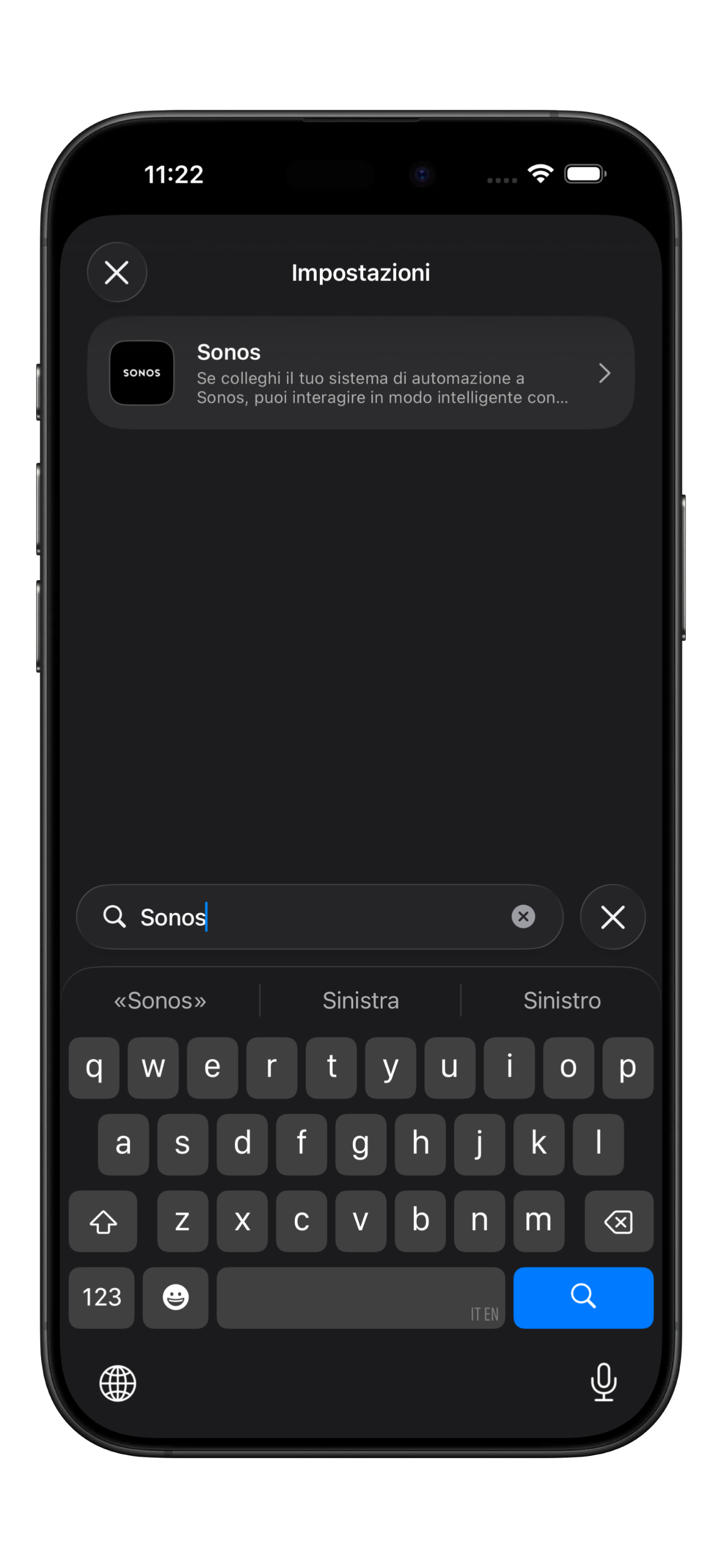
To connect Sonos, open the OHMe app settings, search for *Sonos*, and select the dedicated option.
{% hint style="info" %}
This guide shows the steps for iOS devices, but aside from a few visual differences, the procedure is similar on Android devices as well.
{% endhint %}
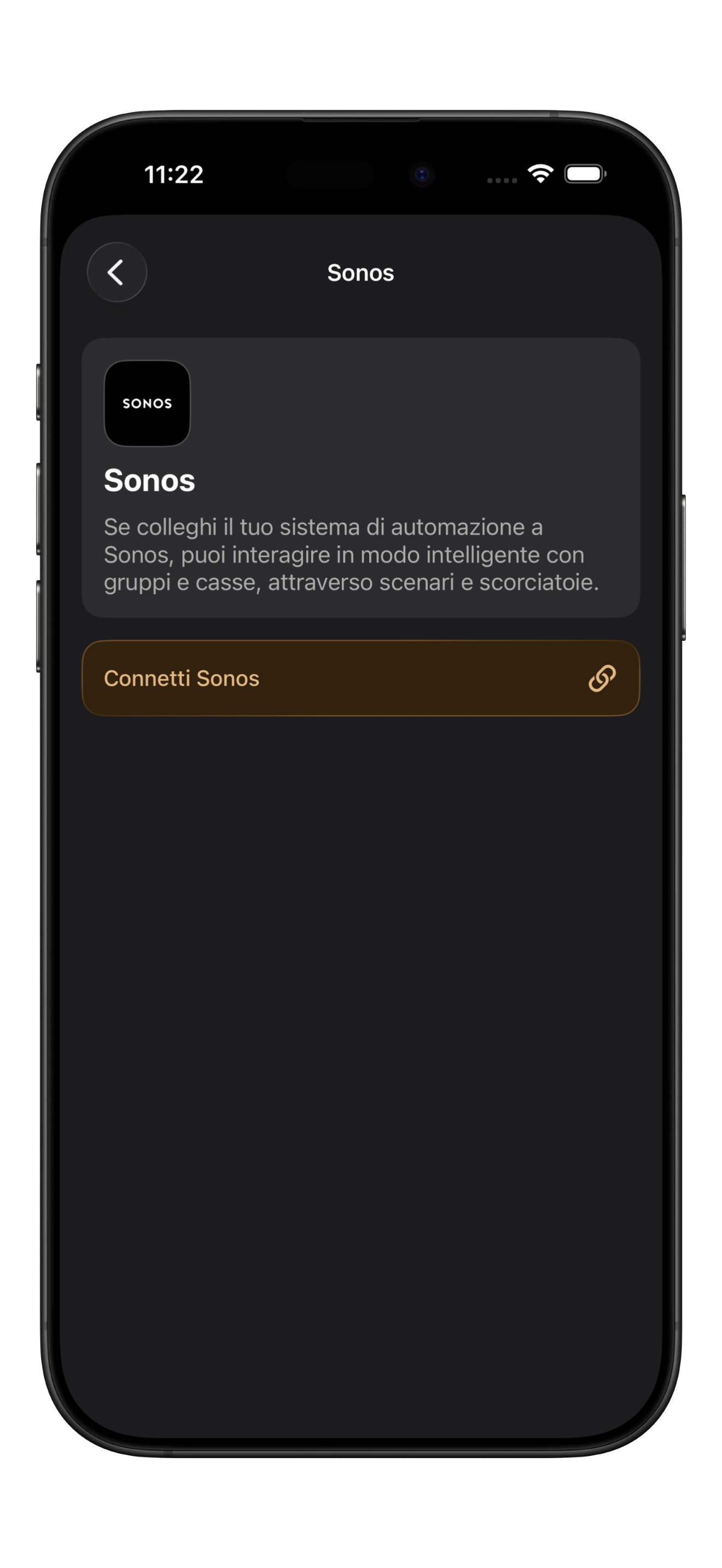
On the next screen, you can link your Sonos account. Click the *Connect Sonos* button to continue.
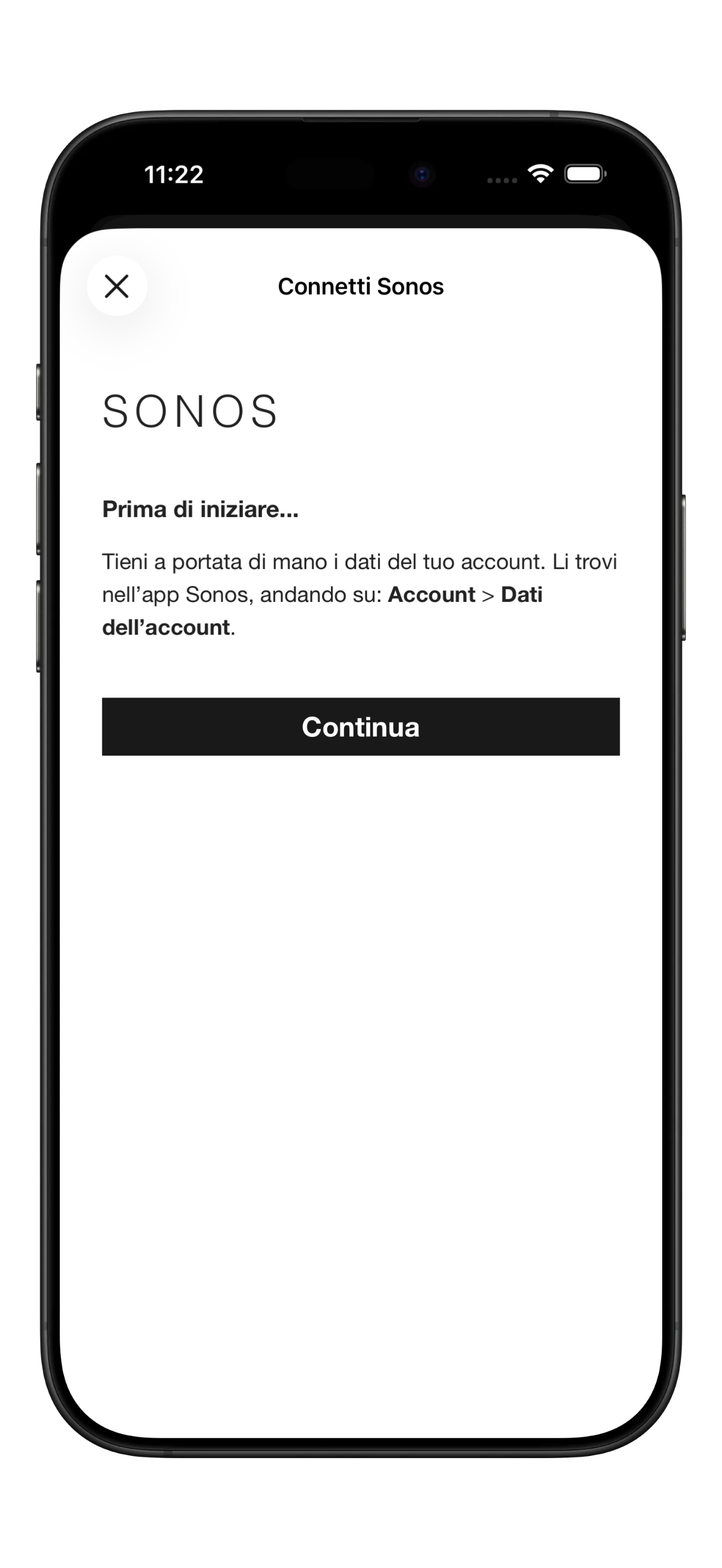
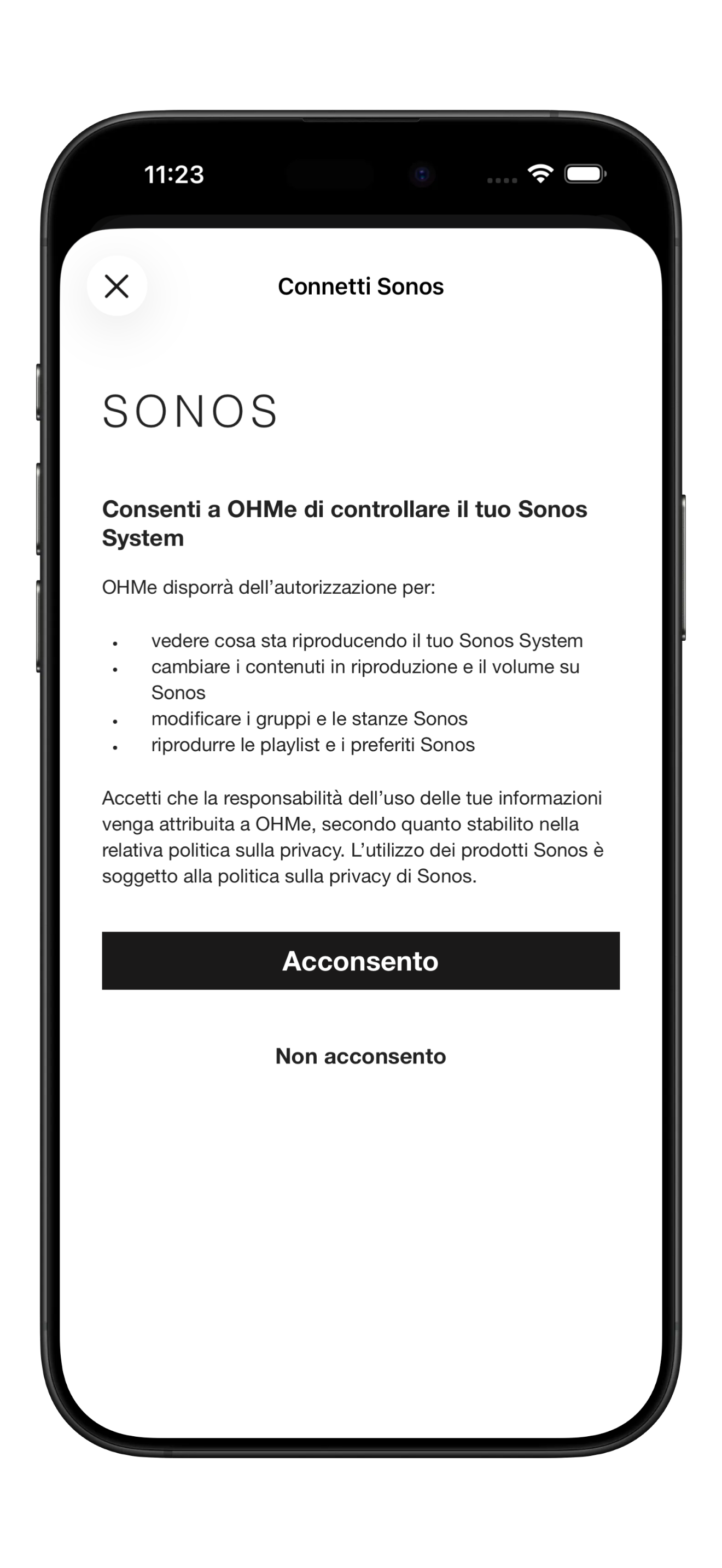
Clicking the button will open the following screen.
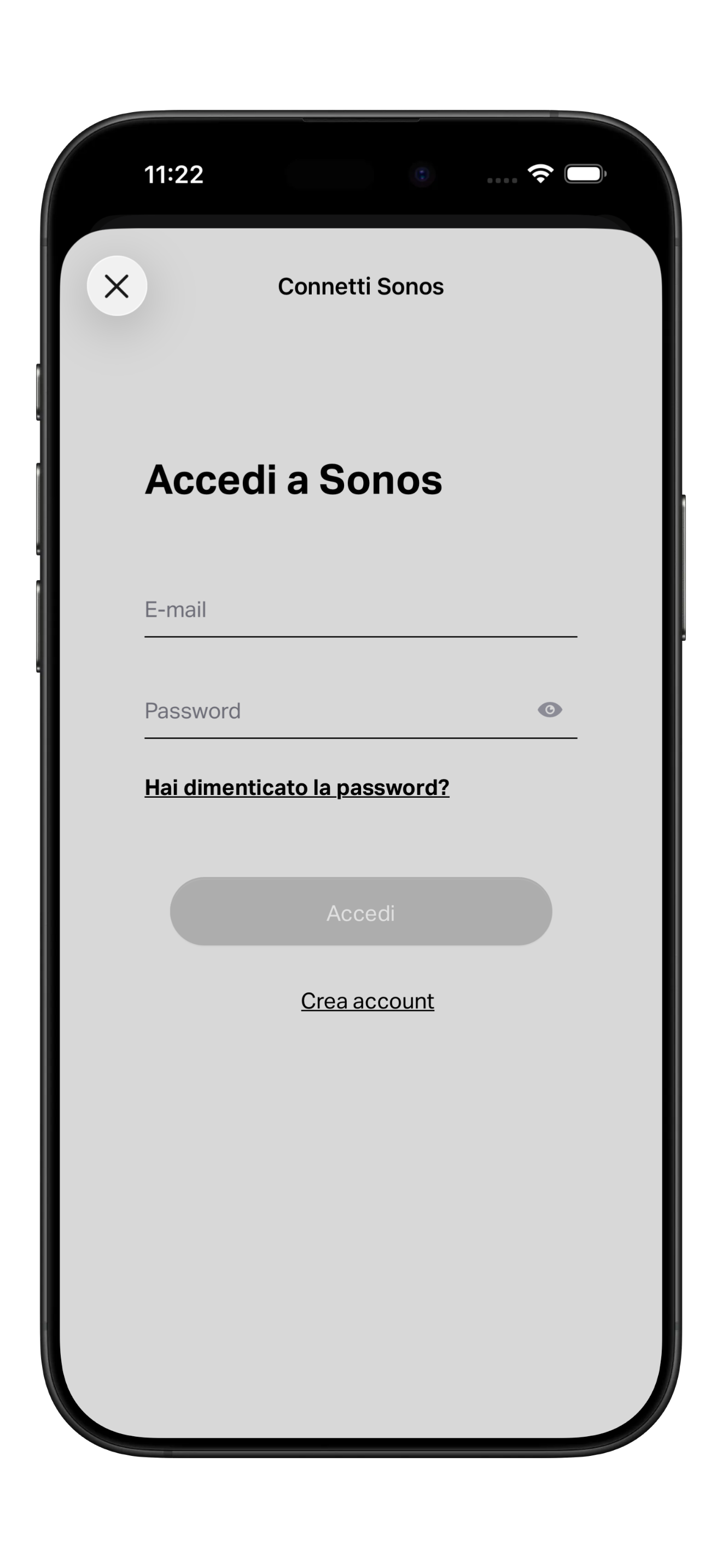
Click the *Continue* button, then enter your Sonos account credentials.
{% hint style="danger" %}
You need to create a Sonos account before continuing.
To register an account, go to [this page](https://login.sonos.com/signin/register).
{% endhint %}
After entering your credentials, press *Sign In* and accept the terms by selecting *I Consent*.
{% hint style="info" %}
By doing this, you authorize OHMe to control your Sonos System.
{% endhint %}
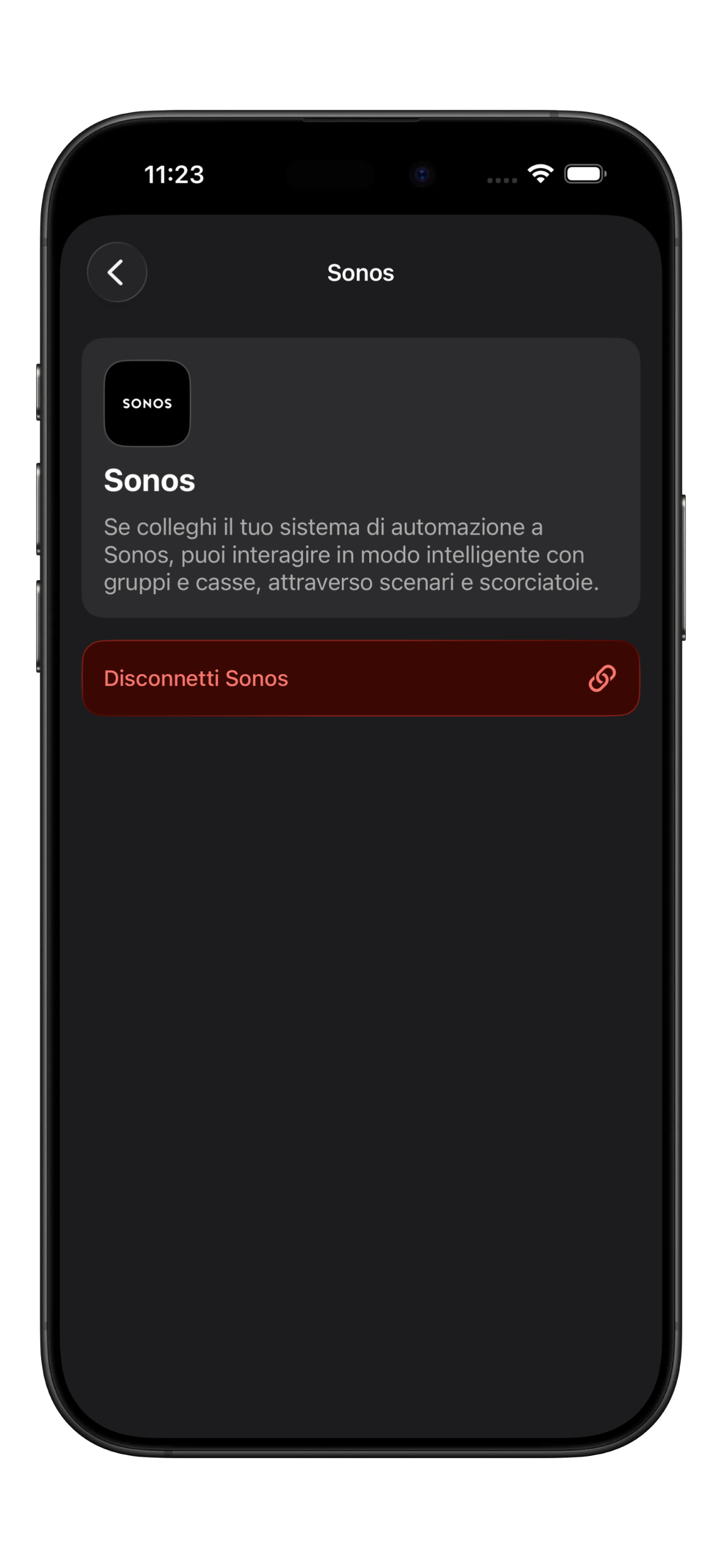
Once the connection is completed, the *Sonos* page should show the *Disconnect Sonos* button.
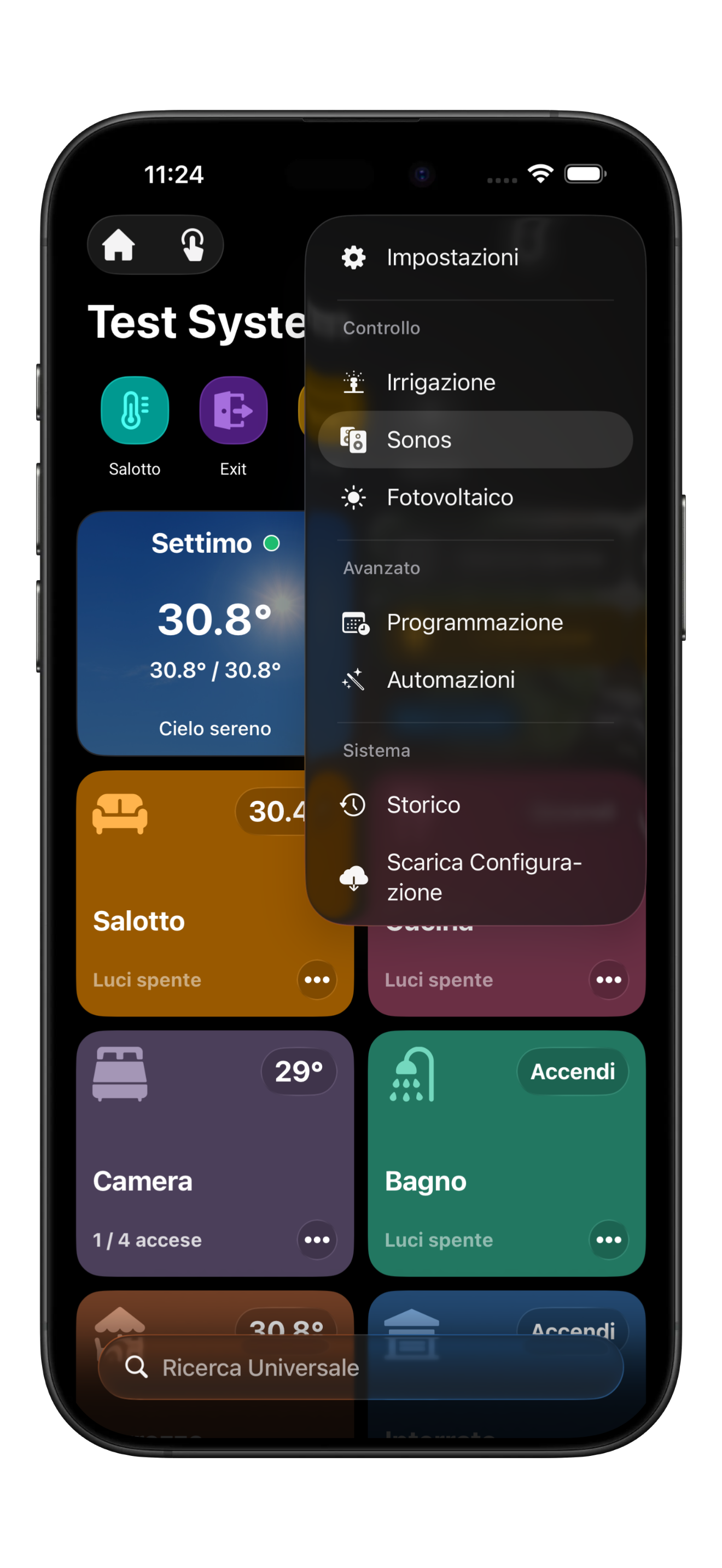
To access Sonos features, select the *Sonos* option from the main menu.
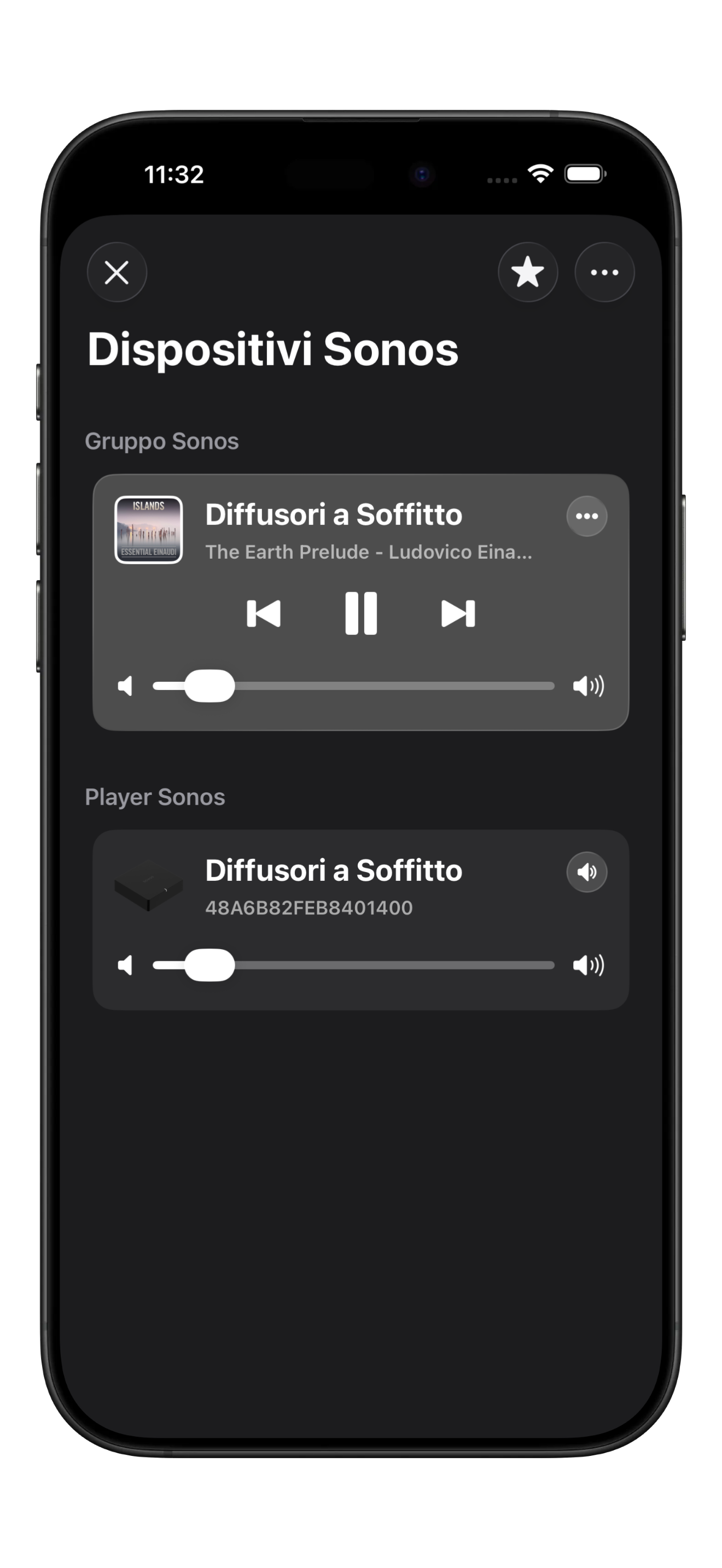
The available features are more limited than in the official app, but the connection allows you to create scenarios and automations that also include music.
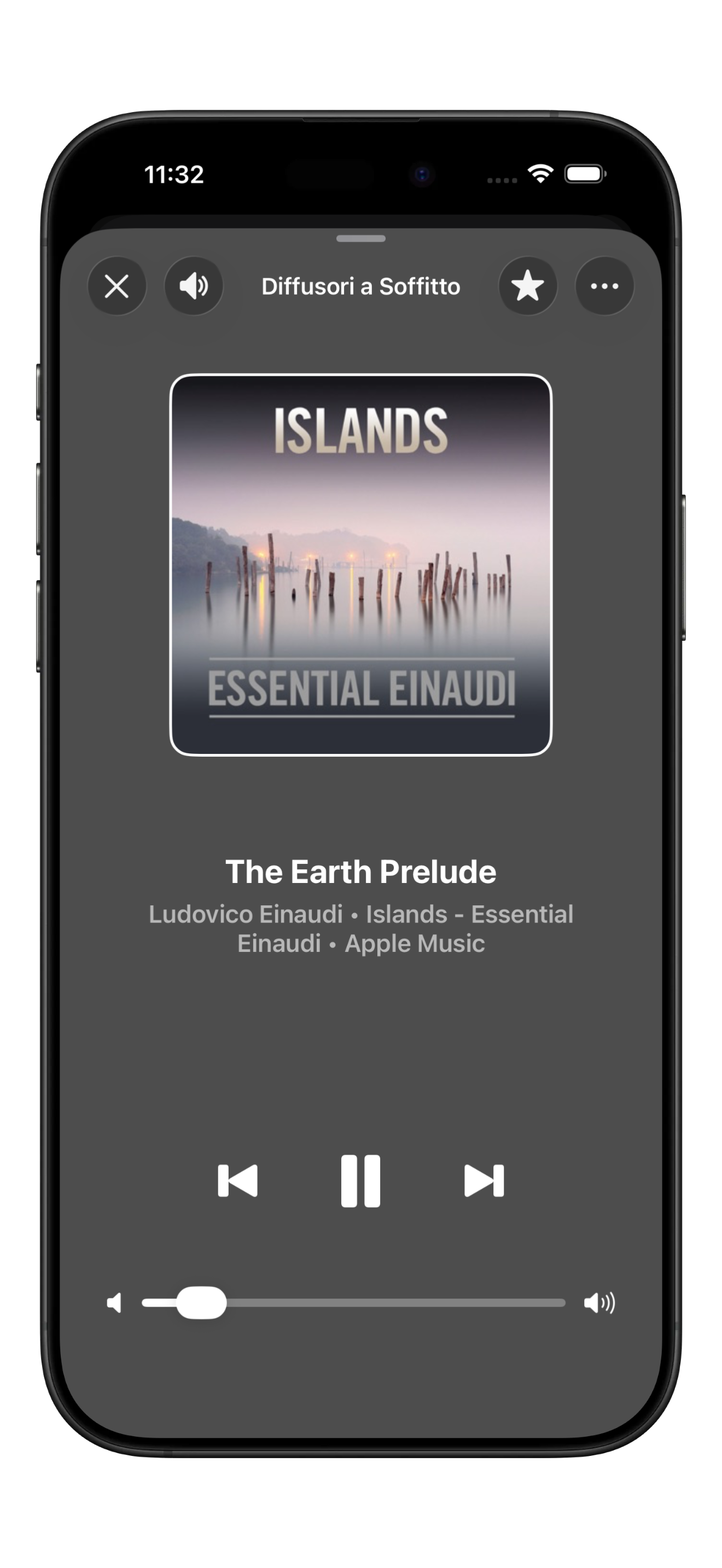
Clicking a Group opens a dedicated page.
## Voice Synthesis
Among the integrated features, *Voice Synthesis* deserves a special mention.
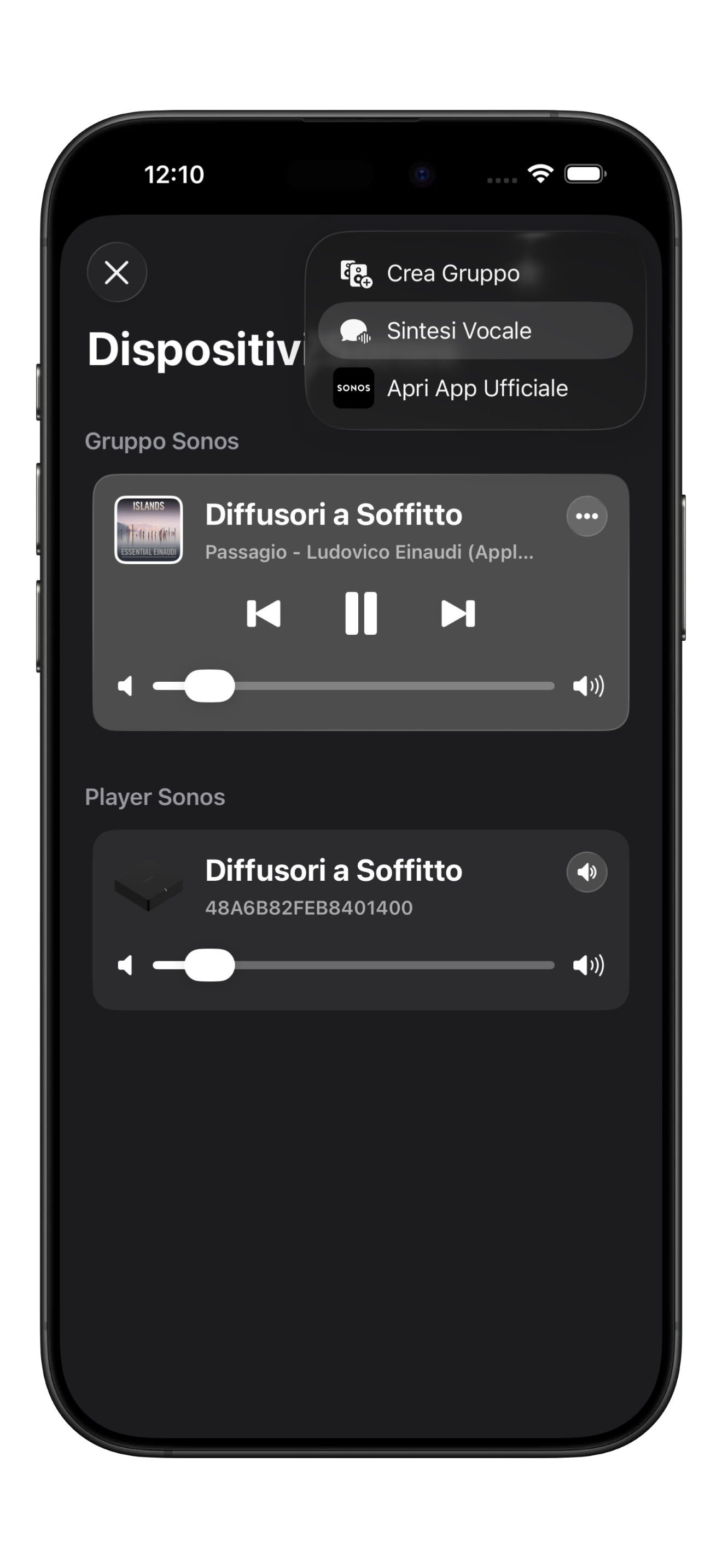
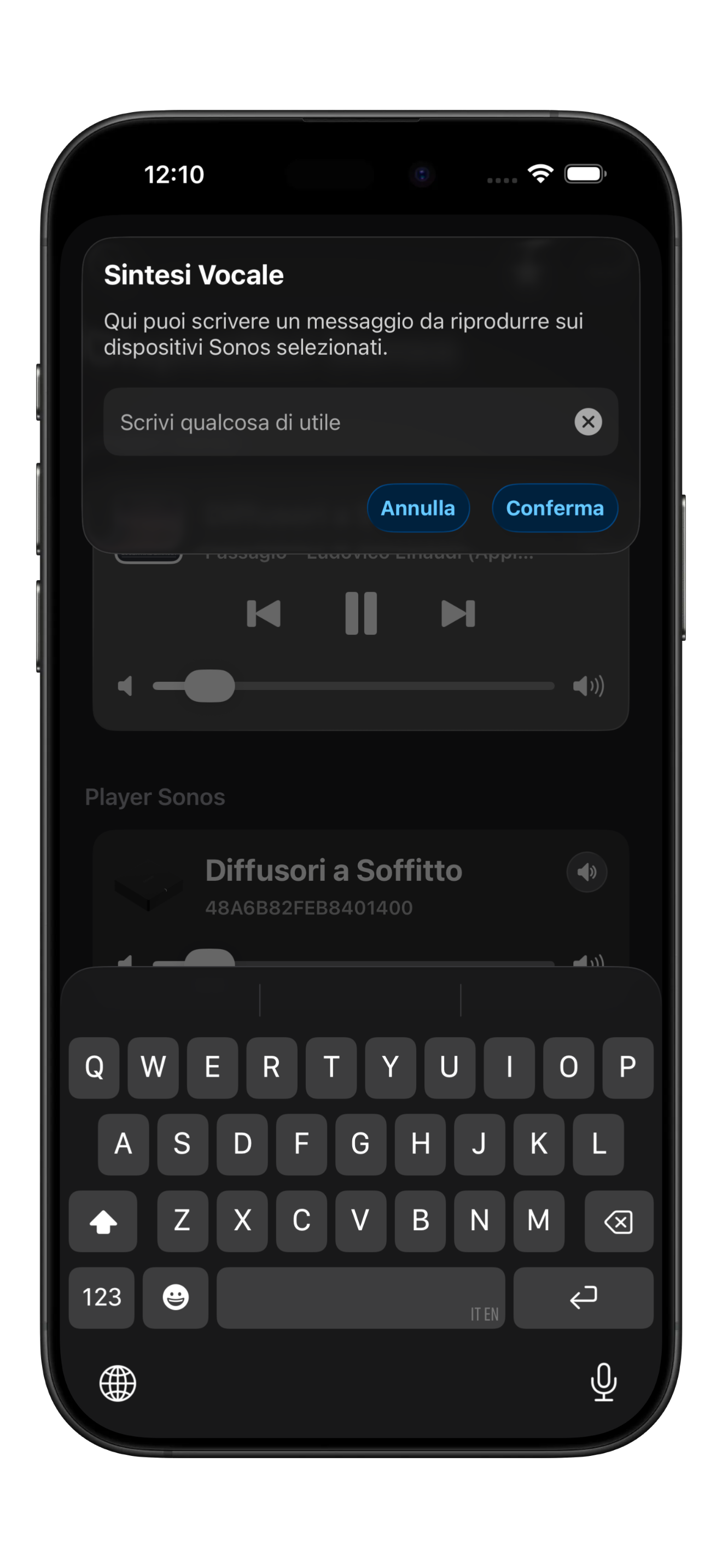
To access this feature, click the three dots `⋯` on the *Sonos Devices* page, then select the *Voice Synthesis* option.
Thanks to voice synthesis integration, you can convert text messages into voice messages that will be played by selected *Sonos Players*.
This function can also be used in scenarios, for example to announce when someone arrives home.
You can also play voice messages in response to an event, for example:
* a door opening
* when the alarm is sounding
* when someone rings the doorbell
* when a button is pressed
* and many others